
A fate worse than death by Powerpoint.
31 July 2025
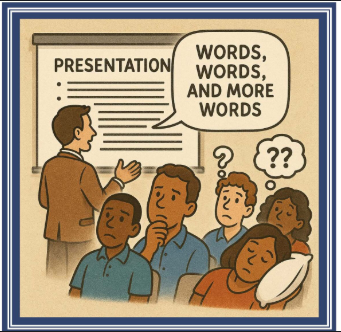
We’ve all been there. A well-meaning presenter with valuable insights…
But the slides?
A wall of words.
Paragraphs. Bullet points. Charts. And more words.
They keep 𝘁𝗮𝗹𝗸𝗶𝗻𝗴, while we’re still trying to 𝗿𝗲𝗮𝗱.
𝗔𝗻𝗱 𝗼𝘂𝗿 𝗯𝗿𝗮𝗶𝗻𝘀 𝗰𝗮𝗻’𝘁 𝗱𝗼 𝗯𝗼𝘁𝗵.
And, in breaking news, new ANZ Chief Executive Nuno Matos, has laid down a company directive that presentations cannot exceed 𝟱 𝗽𝗮𝗴𝗲𝘀. To show "respect for everyone's time". Respect to Nuno Matos.
Here’s the truth:
🧠 People 𝘥𝘰𝘯’𝘵 remember slides full of facts.
❤️ They 𝘥𝘰 remember how you made them feel.
Often, it seems presenters put everything on the slide so 𝘵𝘩𝘦𝘺 won’t forget what to say.
If that’s the goal, there’s a better way:
📝 Use speaker notes.
📄 Or jot down a few keywords on paper.
📱 Or keep reminders on your iPad.
Slides are for the 𝘢𝘶𝘥𝘪𝘦𝘯𝘤𝘦.
Notes are for 𝘺𝘰𝘶.
The best presentations aren’t read.
They’re 𝘧𝘦𝘭𝘵.
They spark interest. They leave space for thinking.
Often, the best slides are just a single image.
Some rules to live by:
Fewer words → better focus.
No bullet points. Ever. In slides. (They're only just acceptable in LinkedIn posts)
One clear message per slide.
Talk 𝘵𝘰 the audience, not 𝘰𝘷𝘦𝘳 your slides.
Because great slides don’t say it all.
𝗧𝗵𝗲𝘆 𝘀𝘂𝗽𝗽𝗼𝗿𝘁 𝘄𝗵𝗮𝘁 𝗼𝗻𝗹𝘆 𝘆𝗼𝘂 𝗰𝗮𝗻 𝘀𝗮𝘆.
Written by Jonathan Stern
ICF Certified Coach | Gallup CliftonStrengths Certified | Former MuleSoft ANZ Leader
I coach high-potential leaders and high-potential scale-ups.
Schedule a conversation